


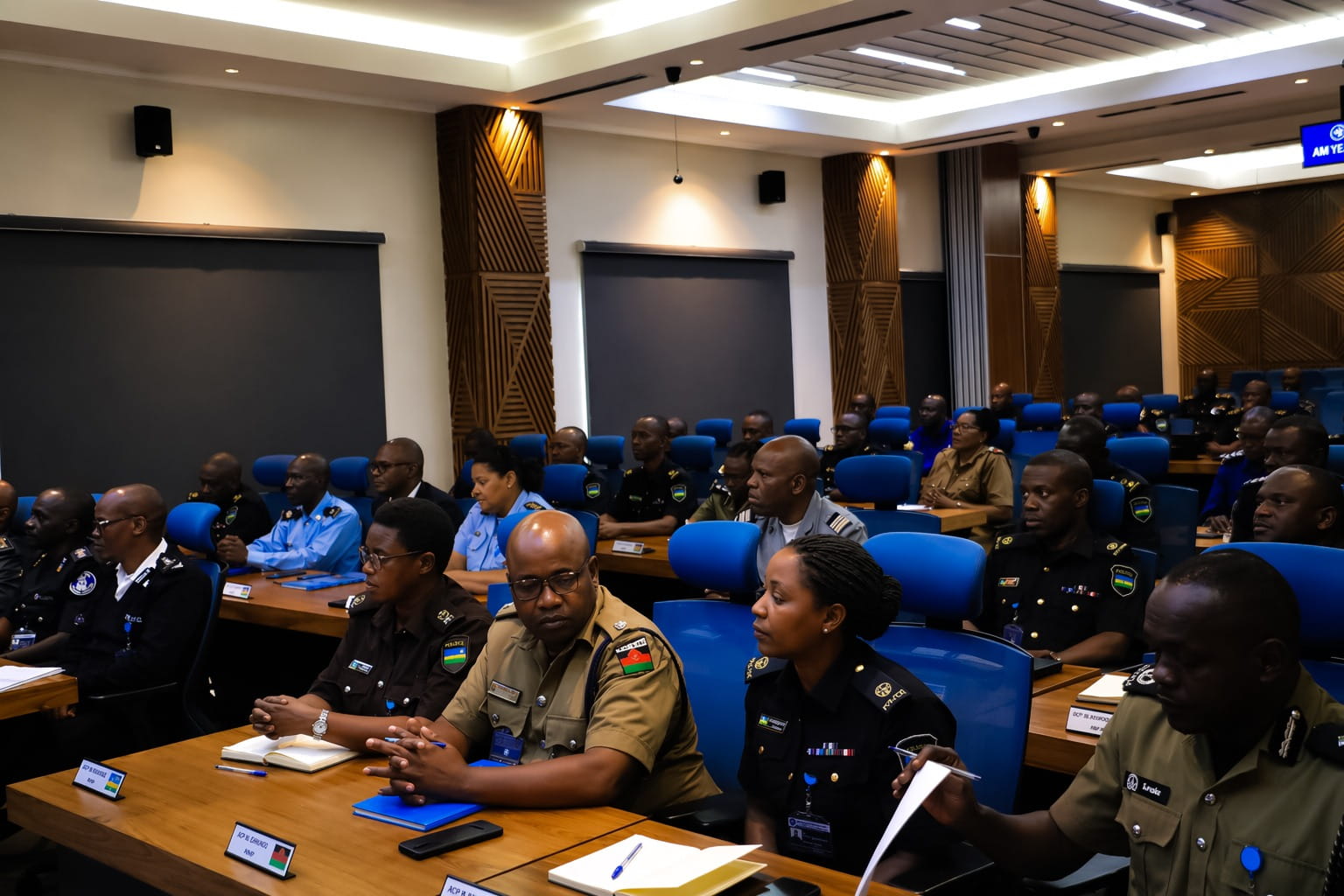
The Inspector General of Police (IGP), CG Felix Namuhoranye, has emphasized the importance of inclusive policing as a cornerstone for building public trust and guiding officers’ conduct in their daily duties.
He made the remarks on Tuesday, April 21, while delivering a lecture to students attending the Police 14th intake of the Senior Command and Staff Course (PSCSC) at the National Police College (NPC).
Drawing from the Rwanda National Police (RNP) experience, CG Namuhoranye outlined a practical vision of inclusive policing as a key driver of security and national development. He urged the senior officers to remain relevant in every engagement with the public.
“Policing goes beyond law enforcement; it requires connecting with people, understanding their concerns, and building trust through meaningful interaction. Communication, therefore, becomes a strategic tool for inclusion,” IGP Namuhoranye said.
The lecture highlighted four key pillars of inclusive policing: diversity, human security, community involvement, and accountability and transparency.
“Diversity enhances representation and sensitivity to different societal groups, while human security shifts focus from protecting the state to safeguarding individual safety and dignity. Community involvement encourages ownership of security processes, and accountability and transparency reinforce legitimacy and public confidence,” the Police Chief added.
He further called for a shift from reactive policing to a proactive, people-centered approach. He noted that responding to crime alone is no longer sufficient, urging officers to anticipate threats, engage communities early, and collaborate to prevent crime.
He also cautioned against shortcomings often associated with traditional policing, such as aggression, limited responsiveness, social distance, coercion, abuse of power, and brutality—practices that can erode public trust. Instead, he encouraged officers to embrace professionalism, empathy, restraint, and respect for human rights.
Reflecting on the progress made by the Rwanda National Police, the IGP highlighted achievements in community-oriented policing. These include youth engagement initiatives such as anti-crime clubs and programmes that empower young people as agents of change.
He noted that such efforts have strengthened crime prevention and reinforced police-community relations, demonstrating that security is most effective when jointly achieved.
During the lecture, PSCSC students raised concerns on evolving crime trends and operational demands in high-risk environments.
Assistant Commissioner of Police (ACP) Richard Bossa Rutaro from Uganda raised concerns about sustaining inclusivity across police units amid evolving crime patterns, while Superintendent of Police (SP) Shupe Tembo from Malawi highlighted challenges related to counterterrorism and cross-border crime.
In response, the IGP underscored the importance of consistent ethical conduct, transparency, and sustained community engagement in maintaining public confidence and ensuring the long-term success of inclusive policing.
He added that while inclusivity enhances operational effectiveness through public cooperation, certain situations may require specialized capabilities beyond community-based approaches.
The lecture also highlighted the importance of continuous learning and adaptive leadership. Officers were encouraged to remain intellectually engaged, embrace innovation, and align strategies with evolving societal needs.
Leadership, the IGP noted, is defined not by rank but by the ability to inspire trust, make sound decisions, and remain accountable. For participants, the lecture marked a defining milestone, reinforcing their understanding and commitment to building a police service that is inclusive, trusted, and central to national progress.